
SINENDET SAFARI · CHALLENGING TREKKING
Umbwe Route
A steep, adventurous approach to Africa’s highest mountain. Umbwe is best considered by experienced, fit trekkers who want a demanding ascent with dramatic scenery.
THE UMBWE EXPERIENCE
A bold ascent through rainforest and ridges
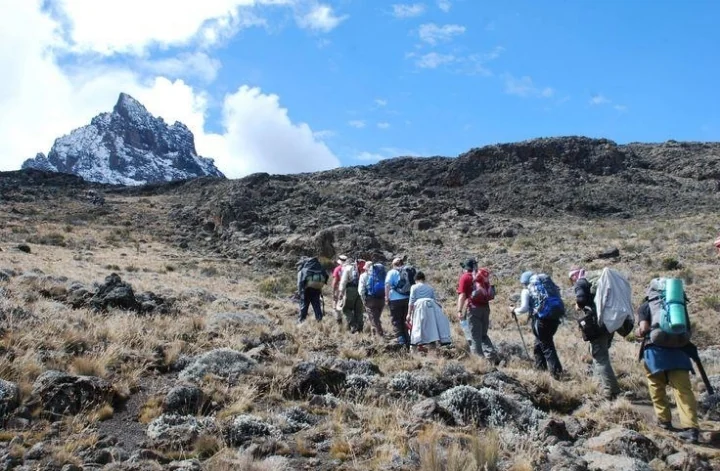
Umbwe is one of Kilimanjaro’s steepest approaches. The path rises quickly from lush southern rainforest toward narrow ridges, open moorland and the striking Barranco landscape.
Early sections can be quieter than some other routes, but the rapid altitude gain gives less time to adjust. Careful preparation, realistic expectations and safety-conscious guiding are especially important.
WHY TREKKERS CHOOSE UMBWE
What makes the Umbwe Route special?
Steep forest trail
An immediate sense of adventure through densely vegetated southern slopes.
Dramatic ridgelines
Rugged terrain and memorable views as the trail gains altitude.
Barranco Wall
A celebrated scrambling section encountered after the early Umbwe ascent.
Quiet early stages
Fewer trekkers on some of the first sections compared with more popular routes.
Summit goal
Work towards Uhuru Peak with an appropriately prepared mountain team.
SAMPLE TREKKING PLAN
Umbwe Route — six-day outline
DAY 01Umbwe Gate to Umbwe Cave Camp+
Begin with park registration and a steep rainforest climb. Starting altitude is approximately 1,600 m; camp around 2,850–2,900 m. Hiking time can be about five to seven hours.
DAY 02Umbwe Cave to Barranco Camp+
Continue uphill as forest transitions to heath and moorland. Reach Barranco Camp near the dramatic Barranco Wall, around 3,960 m, after roughly four to six hours of hiking.
DAY 03Barranco Camp to Karanga Camp+
Scramble over the Barranco Wall with your guide, then cross alpine terrain into Karanga Valley. The camp is around 4,035 m; the day is often about four to five hours.
DAY 04Karanga Camp to Barafu Camp+
Continue through high-altitude desert to Barafu Camp, around 4,640 m. Rest, hydrate and prepare your equipment for the summit attempt. Walking time is often around three to five hours.
DAY 05Barafu to Uhuru Peak and Mweka Camp+
Begin the summit ascent around midnight. If conditions and health permit, continue via Stella Point to Uhuru Peak at 5,895 m, then descend to Mweka Camp. This can be a very long day, approximately ten to fifteen hours.
DAY 06Mweka Camp to Mweka Gate+
Descend through rainforest, complete park exit formalities and return to your accommodation. Allow approximately three to five hours of walking.
SEVEN-DAY OPTION
Can Umbwe be completed in seven days?
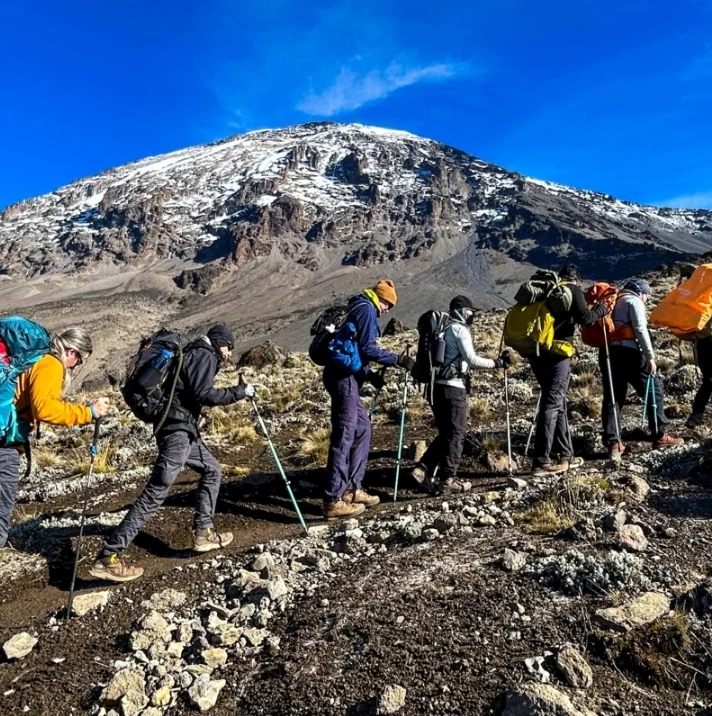
Some itineraries include an extra acclimatization day around Barranco, creating a seven-day option. This provides additional time at altitude but does not eliminate the risk of altitude sickness.
Because the initial ascent is steep and fast, Umbwe is generally not the first choice for someone new to high-altitude trekking. Discuss alternatives such as Machame, Lemosho or Northern Circuit if gradual acclimatization is your priority.
FITNESS, ALTITUDE & SAFETY
Prepare for a very challenging route
Strong general fitness is helpful, but even experienced trekkers can develop altitude sickness. Ask your guide about pacing, symptom monitoring, contingency plans and descent protocols. Always report headache, nausea, dizziness or unusual fatigue promptly.
Conditions can change rapidly. Pack broken-in boots, rain protection, insulating layers, gloves, headlamp and appropriate camping and summit gear. All hiking times and elevations shown here are approximate and should be checked against the operator’s confirmed itinerary.
SEASONS
When to consider the Umbwe Route
The relatively drier periods from June to October and January to February are popular for Kilimanjaro trekking. The forest approach can be slippery during wetter periods, while freezing temperatures and winds are possible at altitude in any season.
Your travel dates should also be informed by permits, current park access, equipment, available days and the experience level of your group.
GOOD TO KNOW
Frequently asked questions
Is Umbwe suitable for beginners?+
Generally not the first choice: it is steep and gains altitude rapidly. Consider a longer route if you are new to high-altitude trekking.
Do we sleep in huts?+
No. Umbwe uses designated mountain camps and tents rather than the huts found on Marangu.
Is technical mountaineering equipment normally needed?+
Usually no, although rocky scrambling, steep trails and difficult altitude conditions demand good preparation and guidance.
Does a seven-day option guarantee summit success?+
No. More acclimatization time can help, but health, weather and altitude risks remain.
What is included in the price?+
Prices and inclusions depend on your confirmed quotation. Verify park fees, crew arrangements, meals, transfers, equipment and cancellation terms in writing.
EXPLORE MORE
Compare other trekking routes
YOUR NEXT ADVENTURE STARTS HERE
Let’s plan your Umbwe experience.
Share your preferred dates, group size, trekking experience and any questions. Sinendet Safari will discuss the itinerary, logistics and a personalized quotation with you.